Hook:
Last year, I watched as some of the world’s largest publishers saw up to 50% of their web traffic disappear—almost overnight. The culprit? Not a new social platform, but the rapid rise of AI-powered search and summarization. As someone who’s spent years tracking disruption in digital content, I believe we’re at a genuine inflection point for publishers, content creators, and even brands.
1. AI Is Rewriting the Rules of Content Discovery
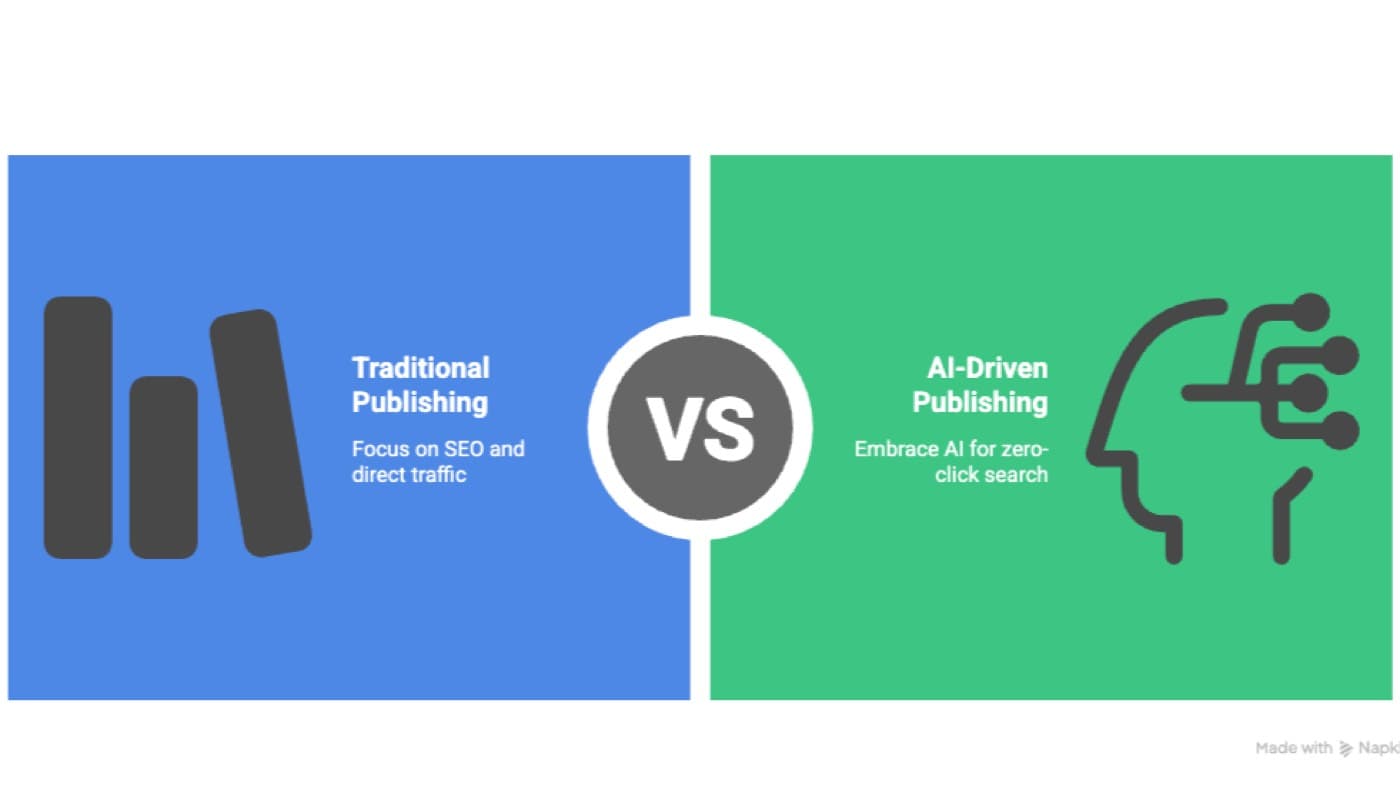
We’ve all seen the rise of “zero-click” search: You type a question, and Google, Perplexity, or Bing gives you the answer directly—no need to click through to a publisher’s website. AI search is now the front door, the living room, and (sometimes) the end of the user journey. For publishers, this means traditional measures of success—traffic, ad views, even brand recall—are suddenly up for debate.
Stats to ponder:
Leading news publishers have lost 30–50% of their search traffic since AI Overviews rolled out .
The average click-through rate (CTR) on organic search results has dropped from 7.3% to just 2.6% in a single year .
Some smaller sites report losing up to 90% of their web traffic .
2. The Death Spiral of Ad-Dependent Business Models
It’s not just about traffic—it’s about survival. About 80% of publisher revenue still comes from advertising . When users stop clicking, ad impressions vanish. There’s real pain in the industry: The New York Post network saw a 12% drop in page views; some companies project $2 billion in lost revenue as AI Overviews become the norm.
As an industry, we can’t just blame algorithms or hope for traffic to rebound. The market is sending a clear message: adapt or get left behind.
3. The Legal Battlefield: Copyright, Attribution & Brand Integrity
Behind the scenes, publishers are fighting a multi-front legal war. Major names like The New York Times, Forbes, and The Guardian are suing AI companies for scraping and republishing content without permission. The legal questions are nuanced:
Is AI training on your content “fair use” or copyright infringement?
Can AI companies display your brand or trademark on their answers?
Who’s responsible if AI-generated content attributes fake news to a real publisher?
The recent Ross Intelligence ruling is just the beginning. The outcome of these cases will shape not just publishing, but the future of digital intellectual property.
4. What Should Publishers Do? A New Playbook
From my research and conversations across the industry, here’s how publishers are building resilience in the face of the AI tsunami:

A. Diversify Revenue Streams
Subscriptions and premium content (think NYT’s 8.5 million subs)
Events, consulting, and even micropayments for individual articles
B. Build Direct Audience Relationships
Newsletters and mobile apps over search and social
Community building and loyalty programs to reduce dependence on third-party platforms
C. Evolve Content Strategy
Focus on content AI can’t easily summarize: investigative reporting, original research, expert opinion, and emotional storytelling
Optimize for “Generative Engine Optimization” (GEO), ensuring your brand and URL are cited in AI answers
D. Embrace AI Internally
Use AI for content drafts, analytics, personalization, and moderation—but always with a human in the loop for quality and credibility
E. Push for Fair Compensation and Partnerships
Negotiate licensing deals for your content (see News Corp’s $250M deal with OpenAI)
Support industry-wide initiatives like Cloudflare’s “Pay Per Crawl,” so AI companies must pay for access to quality content
5. Opportunities Ahead: Collaboration, Regulation, and the Data Economy
Regulatory frameworks are coming, from Europe’s Digital Markets Act to US copyright law updates. Publishers have a window to help shape the rules—ensuring attribution, fair compensation, and transparent AI training data. Industry alliances and collective bargaining will matter more than ever.
Conclusion: From Passive to Proactive
I see this as a wake-up call for the industry. The era of being a passive content provider, waiting for algorithmic scraps, is ending. The future belongs to publishers who:
Own their audience,
Prioritize unique, indispensable content,
Leverage AI thoughtfully,
And advocate for fair value in the data economy.
It’s time for publishers to become indispensable, direct-to-consumer brands—trusted not just by search engines, but by the people who matter most: their readers.
Let’s discuss:
What strategies are you seeing work in the face of AI disruption? Are you optimistic or worried about the new content landscape?
#AI #ContentIndustry #Publishing #DigitalTransformation #ZeroClickSearch #Media #DigitalStrategy #Copyright #AdRevenue #AudienceEngagement #GenerativeAI #BrandTrust #NewsMedia #FutureOfWork
First published on LinkedIn.