I’ve never been a mainframe developer myself, but in my years working with healthcare giants like Aetna, I’ve built web applications that relied on mainframes as their backbone.
I still remember the complexity of those monoliths — vast, tightly coupled systems where the entire business logic was coded in COBOL and the data layer lived on DB2. The mainframe wasn’t just “a server” — it was the heart of the enterprise.
These systems have been serving critical business needs for decades. That’s why I’ve always wondered: How would AI — especially Generative AI — really impact such legacy applications?
What My Research Tells Me
Even if you’ve never touched a line of COBOL, you quickly realize that:
Mainframes are not going away anytime soon. In banking, healthcare, insurance — they remain the most reliable transaction engines.
The bigger change is in how we maintain and modernize them.
GenAI tools are now doing things that would have seemed impossible a few years ago:
Reading and understanding decades-old COBOL code.
Extracting embedded business rules from millions of lines of code.
Suggesting or even generating equivalent Java/.NET implementations with 60–80% automation.
Handling operational chores like batch scheduling, anomaly detection, and performance tuning.
IBM’s watsonx Code Assistant for Z is a great example — it can speed up modernization timelines from years to months while keeping the core business logic intact.
What This Means for the Workforce
From my perspective:
The platform stays — mainframes will continue to run critical workloads.
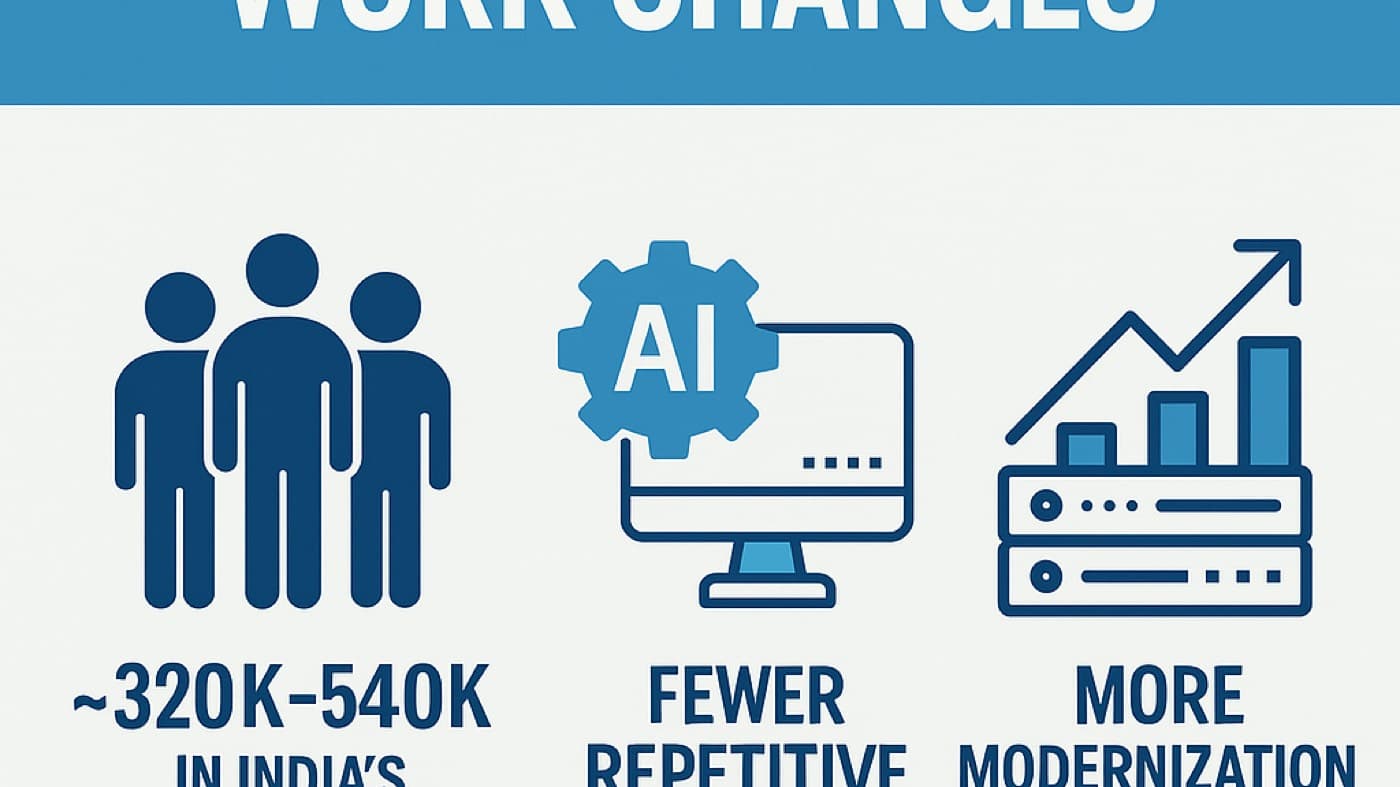
The work changes — repetitive maintenance tasks will shrink, while modernization and integration work will grow.
Teams will need hybrid skills: legacy expertise + AI tool fluency + knowledge of cloud/hybrid architectures.
In India alone, there are ~320k–540k professionals working in mainframe and legacy maintenance. The size of the platform may not change quickly, but the number and type of people required to run it will.
💡 My takeaway:
Even if you’re not a mainframe developer, if your applications interact with one, AI is going to change your world too. The days of treating mainframes as “black boxes” are over — AI is opening them up, making them more accessible, and accelerating the pace of change.
Mainframe stays, work changes. The smartest thing we can do is learn to work with these new AI capabilities, not wait for them to replace us.
Your comments please !
First published on LinkedIn.